Metal Processing
Metal Processing
Centered on automobiles and information and communication devices, we supply high-performance copper alloys and electroplating services, as well as metal-ceramic substrates, based on alloy control technology, plating film formation and composite technology, and joining technology.
Core Technologies
Copper Alloy Processing Technology
-
- Composition Control
-
- By performing texture control and precipitate control, we develop copper alloy materials that satisfy the characteristics required in advanced markets (automobiles, high-speed communication, wearables).
-
- Precision Rolling and Flatness Control
-
- In areas such as autonomous driving and mobile communications to build a smart society, the miniaturization of components is accelerating. The thickness of the material is also very thin (< 100 μm), and it is required to create the thickness and shape with high precision. Therefore, we have introduced the cutting-edge control technologies such as precision rolling technology and flatness control technology.
Surface Treatment Technology (Copper Alloys and Electroplating)
-
- Sn Plating
-
- We have developed STAR (Super Thin Advanced Reflow) plating that achieves excellent contact reliability and low insertion force. Its performance is very much appreciated by our customers.
-
- Silver-Graphite Composite Plating
-
- Charging terminals for EVs are required to have low electrical resistance, durability of insertion and removal, and corrosion resistance. We have developed SilC plating®, a brand new Ag-graphite composite plating that meets these requirements at a high level.
- SilC plating® contains graphite particles in the silver matrix which prevent adhesive wear during insertion and removal of the terminals, which typically occurs on silver.
-
- Plating Film Crystal Control Technology
-
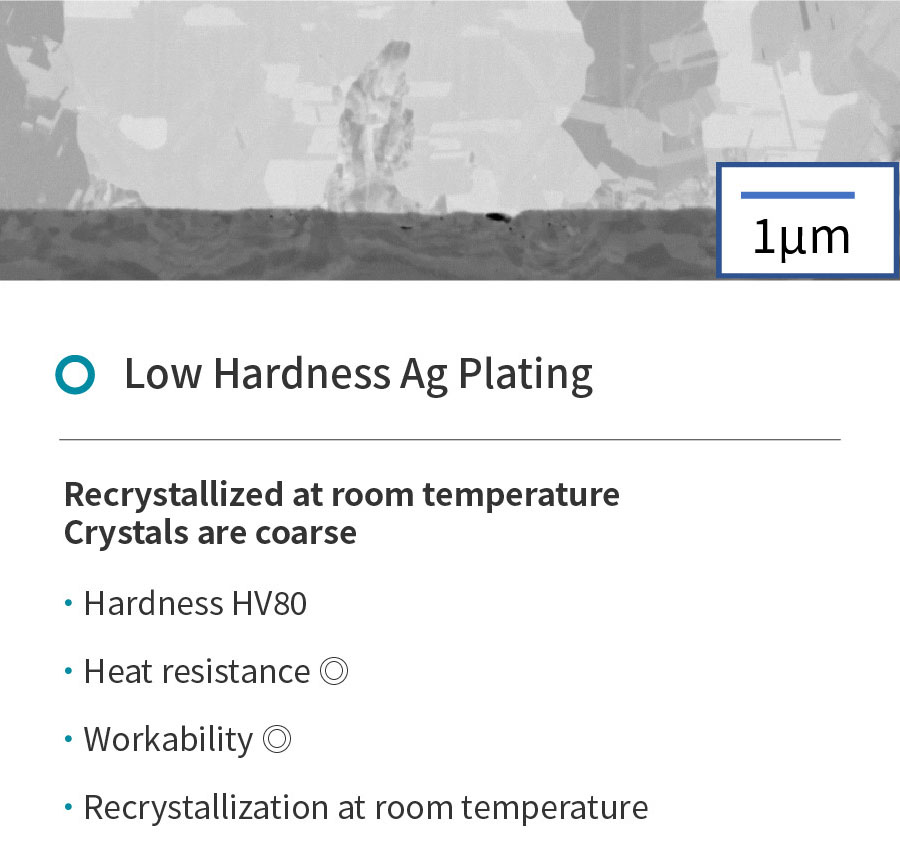
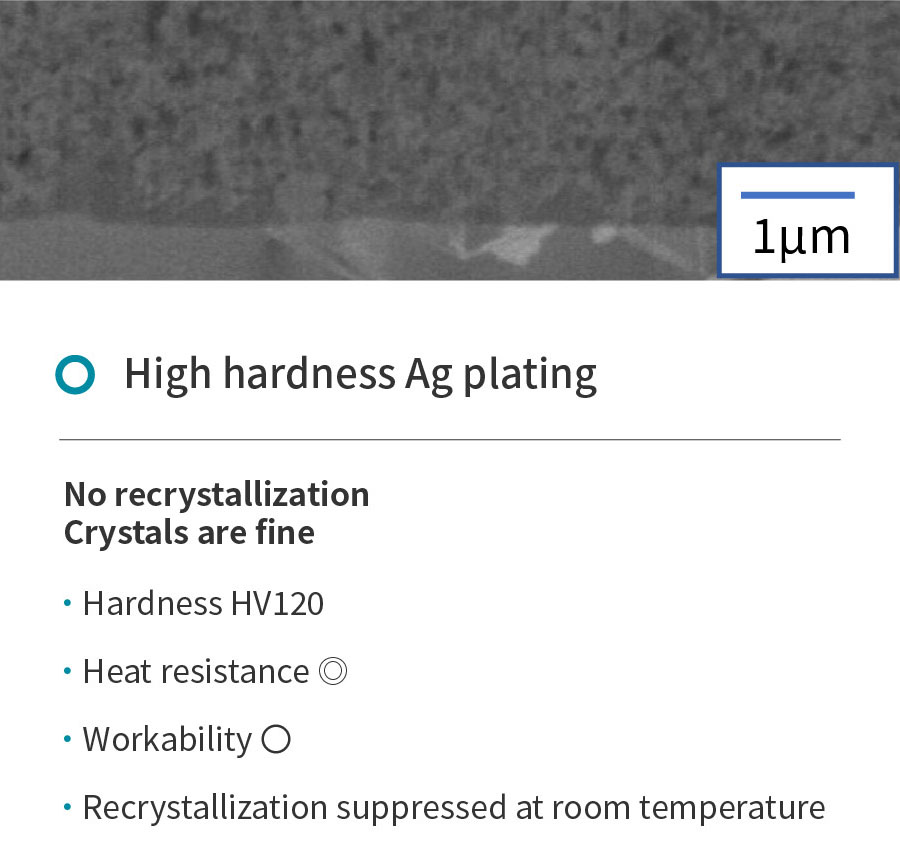
- High Hardness Ag Plating, Low Hardness Ag Plating
-
- By controlling the crystalline state of the Ag plating film, each function has been improved.
- We have developed a plating membrane that meets the needs of automobiles.
-
- Micro plating Technology
-
- Au Spot Plating
-
- We have the technology to apply Au plating with extremely high precision and limited areas.
Bonding Technology
-
- Active Metal Brazing Technology
-
- We have developed metal-ceramic substrates with low thermal resistance and excellent heat-cycle durability using active metal brazing technology.
- We are engaged in the design of copper-bonded ceramic substrates and the development of bonding technologies to meet the future needs of power modules.
-
- Molten Aluminum Direct Bonding Technology
-
- We have developed a new bonding method using molten aluminum bonding that achieves few bonding defects and high bonding strength and heat dissipation.
- We have developed a one-of-a-kind product “Aluminum Base Integrated Substrate” that integrates aluminum circuits, ceramics, base plate, and heat dissipation fins.
Circuit Formation and Surface Control Technology
-
- Etching Technology
-
- We have circuit formation technology by precision etching.
- We have shape control technology of circuit cross section for excellent heat-cycle resistance.
-
- Surface Treatment Technology
-
- We have surface control technologies that realize solderability, wire bondability, and well image recognition.
- We have surface control technologies that are suitable for sintering process.
Examples of Core Technology Applications
-
- Composition and Microstructure Control Technology
-
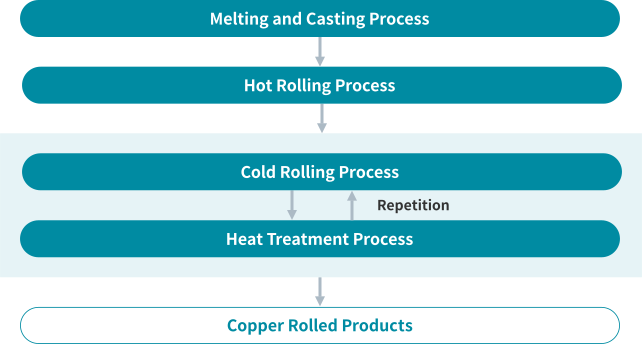
- Representative Treatment Process
-
-
- Technical Features: Points of Differentiation
-
- Melting and Casting: Microstructure control, Preventing contamination with impurities, Preventing Segregation
- Hot Rolling: Precipitate distribution control, Dynamic recrystallization, Flatness control
- Cold Rolling: Grain size & orientation control, Thickness control, Flatness control
- Heat Treatment: Grain size & orientation control, Precipitate distribution control
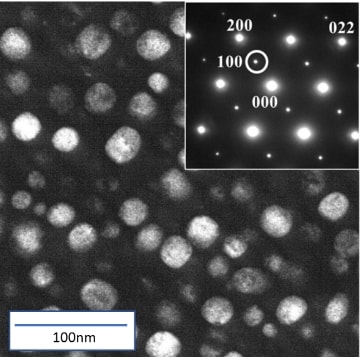
Ultrafine Precipitates in Cu Alloys
-
- Precision Rolling and Flatness Control Technology
-
- Representative Treatment Process
-
-
- Technical Features: Points of Differentiation
-
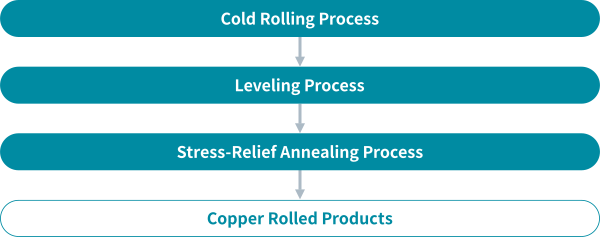
- Cold Rolling: Thickness control, flatness control, surface roughness control
- Leveling: In-plane elongation difference control, residual stress control
- Stress-Relief Annealing: In-plane elongation difference control, residual stress control
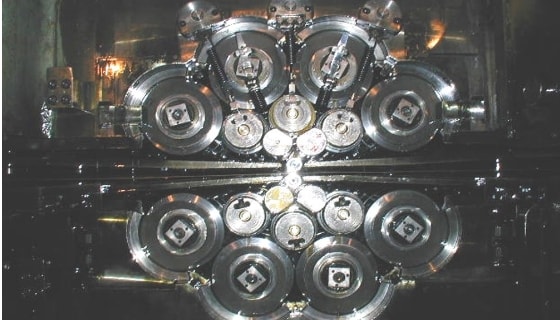
20-High Rolling Mill
-
- Reflow Sn Plating Technology
-
- Typical Treatment Process
-
-
- Technical Features: Points of Differentiation
-
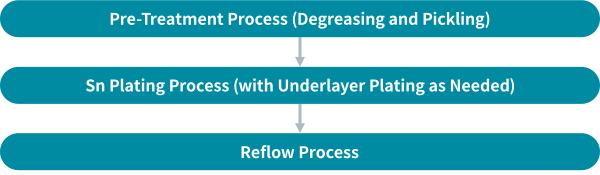
- Pre-treatment process: Selection of solutions to remove dirt and oxides from the surface of the material, and solution control
- Sn plating process: Current distribution and stirring of solutions
- Reflow process: Residual stress removal, diffusion layer, and temperature distribution

Sn-Plated Product
-
- Silver-Graphite Composite Plating Technology
-
- Typical Treatment Process
-
-
- Technical Features: Points of Differentiation
-
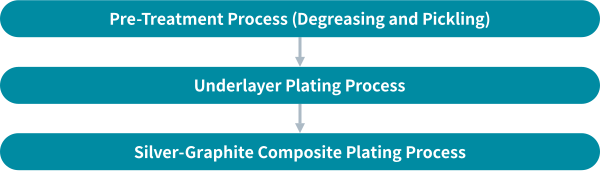
- Pre-treatment technology
- Underlayer plating process: Current distribution and stirring of solutions
- Silver-graphite composite plating process: Current distribution, stirring of solutions, and uniform dispersion of graphite particles
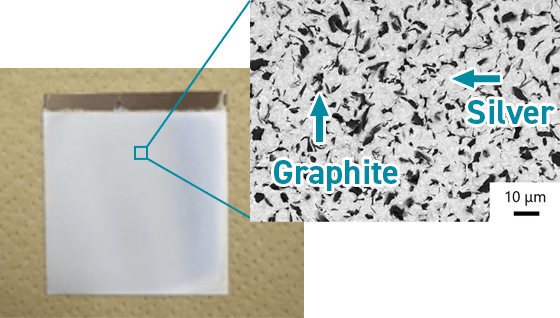
Silver-Graphite Composite Plating
-
- Plating Film Crystal Control Technology
-
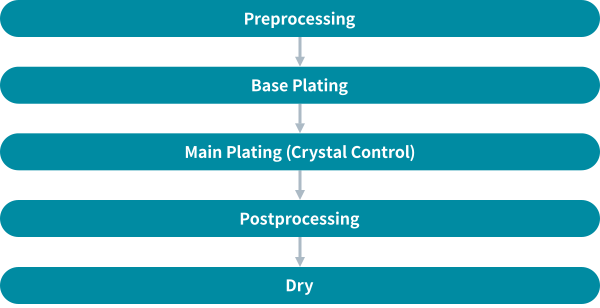
- Representative Treatment Process
-
-
- Technical Features: Points of Differentiation
-
- By controlling the Ag plating structure, it is possible to distinguish between high and low hardness.
- Abrasion resistance and heat resistance according to the application.
-
- Bonding Technology
-
- Typical Process: Active Metal Brazing Technology
-

-
- Technical Features: Points of Differentiation
-
- Characteristics (bonding strength, etc.) have been improved by optimizing brazing material composition, brazing material manufacturing process, brazing material application process, bonding temperature, and bonding atmosphere.
-
- Circuit Formation Technology
-
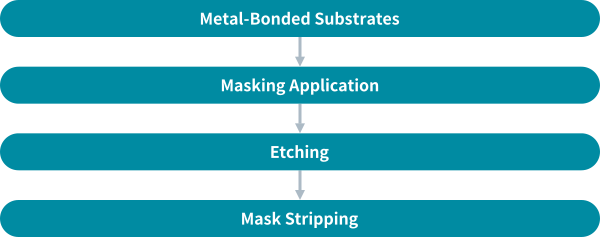
- Typical Process: Masking and Etching Technology
-
-
- Technical Features: Points of Differentiation
-
- Highly accurate circuits can be formed by optimizing masking materials, masking application processes, etching solution composition, etching processes, etching conditions, and mask-stripping processes.
-
- Surface Treatment Technology
-
- Typical Process: Plating Technology
-

-
- Technical Features: Points of Differentiation
-
- We improved the environmental durability by optimizing the plating process, plating solution composition, and plating conditions.
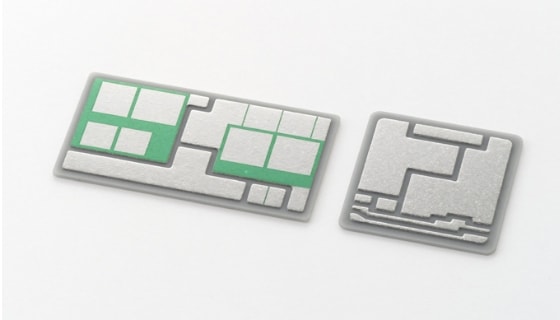
Cu-AlN Substrate